
Get the tools to beat your pain.

Our services and methods.
Your freedom is the point. If you’re stuck in a cycle of pain, the first step is classifying your problem. Then we’ll teach you to address it for yourself with simple movements that alleviate tension and improve your health.
That’s the McKenzie Method. But it’s not the only one.
Most patients benefit from chiropractic care or other forms of therapy as they journey into greater health. Your personal assessment will determine your plan. Here are some ways we can help.




Chiropractic
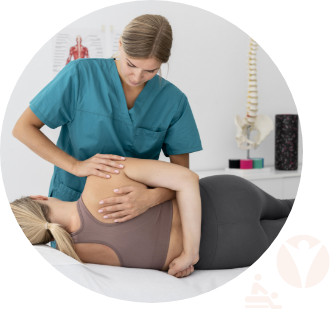
Chiropractic Care
Chiropractic specializes in musculoskeletal health and well-being. Chiropractors help their patients reduce pain, increase movement, improve performance, and enhance their quality of life, without the use of drugs or surgery. There are many different treatment techniques chiropractic utilizes to help their patients including spinal manipulation, soft tissue work, and therapeutic exercises.
ISSR’s founder, Dr. Eric Lukosus, has worked as a chiropractor for more than 25 years.
He holds a DACBSP, the highest level of certification available from the American Chiropractic Board.

McKenzie Method

McKenzie Method
The McKenzie Method is also known as Mechanical Diagnosis and Therapy (MDT). It’s best known for its extension exercises – but there’s so much more than that. In its purest application, the McKenzie Method is a comprehensive approach to the spine and peripheral joints. It’s based on strong evidence, sound principles and fundamental research.
McKenzie gives us the tools to classify your problem. And it gives you tools to deal with it yourself.
The McKenzie Method is the basis of new-patient assessments and the foundation of all of our work at ISSR. But once we’ve used McKenzie to identify your needs we have a lot of tools at our disposal to address them.

Sports Rehabilitation
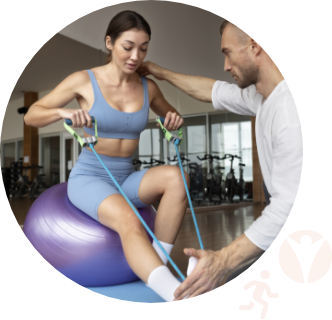
Sports Rehabilitation & Performance Evaluation
Sports rehabilitation is a specific branch of physical therapy. Like all rehab, it’s about restoring normal function – but your goal isn’t just to live well, but to compete well.
At ISSR, sports rehab has been a cornerstone of what we do for decades. Our therapists will help you work toward your performance goals, evaluating your performance as you progress to ensure you’re getting the results you need.
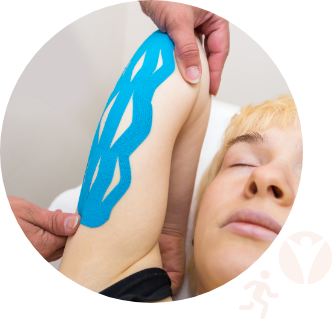
Kinesiotaping
Developed by Dr. Kenzo Kase in the 1970s in Japan, kinesiotaping has become the gold standard for therapeutic rehabilitative taping. The proprietary technique uses a uniquely designed and patented tape for treatment of muscular disorders and lymphedema reduction.

Physical Therapy
Physical rehabilitation is about getting you back to normal function. First, you’ll learn how to spare your body further harm. Then you’ll learn how to restore your tissues so you can return to an active lifestyle.
Like everything at ISSR, physical therapy is about more than mechanical treatment of your body. We’ll help you to understand your problem and teach you to care for yourself – so you can return to your life without obstacles. Your rehabilitation begins knowledge and with therapeutic exercise – but it may include other treatments from our range of expertise like therapeutic ultrasound, interferential muscle stimulation, kinesiotaping, dry needling, dynamic neuromuscular stimulation, myofascial release, Graston Technique or the Erchonia FX 635 therapeutic laser.
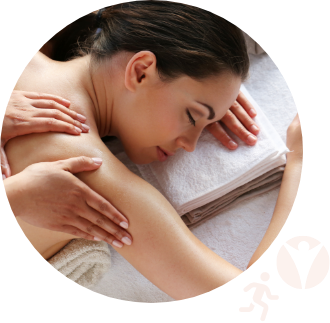
Myofascial Work
Myofascial therapy, or myofascial release, is a massage technique that uses deep-tissue
treatment to affect the fascia, connective tissue between muscles, tendons, ligaments, and joints. It is also effective in the treatment of trigger points, sensitive areas of the body that can be stimulated to cause a specific effect in another part of the body.
Myofascial restrictions, trigger points, or alterations can result from trauma, inflammatory
responses, or even surgical procedures. These restrictions can produce significant amounts of tensile pressure, causing pain and poor movement. Myofascial therapy can address these problems, allowing better movement and reduced levels of pain. We often recommend a series of 3-6 sessions.
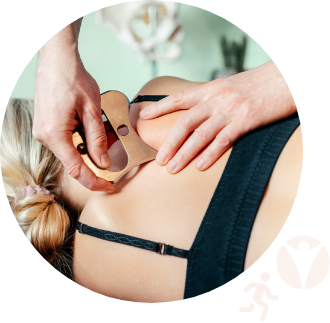
Graston Technique
Graston Technique® is an innovative, patented form of instrument-assisted soft-tissue mobilization that enables clinicians to effectively break down scar tissue and fascial restrictions. The technique utilizes specially designed stainless-steel instruments to detect and treat areas exhibiting soft-tissue fibrosis or chronic inflammation.
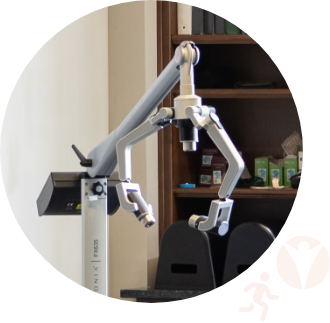
Low-level Laser Treatment
Yes – laser treatment can be a safe and powerful remedy for back pain! Our Erchonia FX 635 is an FDA market-cleared laser that has been proven to effectively treat chronic lower-back problems. Participants showed a 58% pain reduction after 2 months in a double-blind, placebo-controlled, randomized, parallel group, multi-center clinical trial.
The recent clearance of the FX 635 is groundbreaking for the pain-management community. It’s an important tool in the war on opioids – and it could be key to your own struggle against pain.
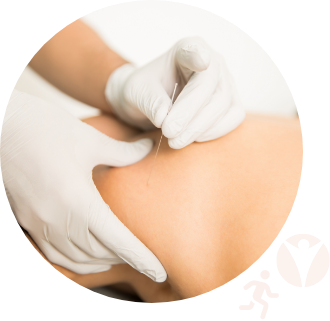
Trigger-point Dry Needling
When a therapist inserts an acupuncture needle into a tight or sore muscle, the needle changes that muscle’s physiology, making it more able to relax. Trigger-point dry needling can be an effective method to address long-standing muscle pain or joint problems related to chronic muscle tightness. It’s one more therapy we’re happy to have in our tool set.